Shared memory for AI work
Second
Brain.
The conversation ends.
The work stays with us.
One project memory that different assistants can read, update and hand off without starting from scratch.
Internal system · In use
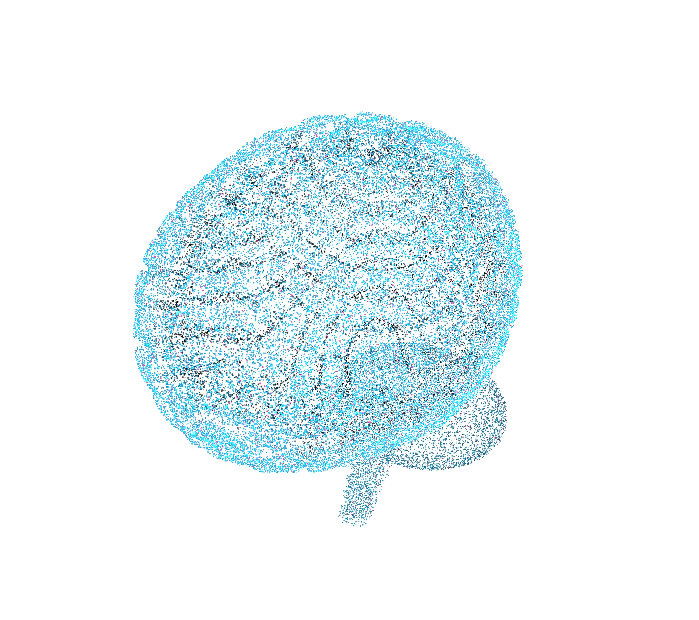
A different point of view.
Turn the brain, change its flow, or pause to inspect the particles. The visual is an illustration of memory, not a map of live model activity.
Project memory that survives the next chat.
Second Brain is a shared, versioned memory system for work with coding assistants. It keeps current decisions, verified outcomes, rejected approaches and next actions available when the model, chat or machine changes.
- Used with
- Codex, Claude and Gemini
- Stores
- Sanitised outcomes, current project summaries and dated history
- Retrieves
- Project context, briefings, topics, profiles and design rules
- Status
- Private internal system, in daily use
Different kinds of memory, kept in their place.
The current project summary is the starting point. Older evidence stays available without being loaded into every conversation.
- Session outcomes
- Small, immutable events record the request, outcome, changed files and checks. Rejected approaches and unresolved work belong here too.
- Capture is explicit. The system does not silently collect every conversation or keep raw transcripts as session events.
- Project state
- Compact project summaries hold what is true now: the goal, latest verified state, decisions and next work.
- Detailed timelines move into an archive so the current summary stays useful as a project grows.
- Bounded retrieval
- Ask for one project, a topic search or a briefing. Retrieval returns a limited amount of relevant context.
- The assistant does not need to load the entire journal. Search results can include source identity, dates and historical/current classification.
- Shared contracts
- Small adapters let different assistants follow the same capture, retrieval and synchronization conventions.
- Shell tools support capture and maintenance. The Model Context Protocol bridge provides read-only access for connected chat clients.
- Versioned history
- Git records the changes. Validation checks structure before synchronization, while capture identities make retries recoverable.
- No vector database or external embedding service is required. Assistants still have to check whether an old fact remains true.
Try a fictional handoff
A new chat. The same project.
Step through a small example of what survives a conversation.
Session outcome
The export works. The label does not.
The fictional photo tool now exports a transparent PNG. The sample passed its export check. “Save image” confused the reviewer, so the next task is to rename it “Export PNG”.
- Checked
- Transparent export
- Unresolved
- Button wording
Illustrative content only. Nothing here reads or writes the private second brain.
A practical assistant handoff.
Finish a task, record the outcome and checks, then bring the project summary up to date. The next assistant retrieves that project before starting. Decisions and failed attempts travel with the work instead of depending on one chat’s context.
The animated brain above is a visual metaphor. The product is the capture, retrieval and maintenance system behind it.
Private by design of this showcase.
The working journal, project records and personal context are not exposed through this page. The walkthrough uses a fictional example. This is an internal system built around Markdown, scripts and Git, not a hosted memory service or public download.